Hydration vs. Moisture — Hyaluronic Acid 101

Water moves; structure holds. The balance between the two decides how skin behaves and how long it endures.
Hydration vs. Moisture — Hyaluronic Acid 101

I. What Hyaluronic Acid Actually Is

Hyaluronic acid (HA) is a humectant that binds water, drawing it into the surface layers of the skin. In Aurum Lustrum (III), it works alongside Centella Asiatica, Spirulina, and Acetyl Hexapeptide-8 to restore elasticity and sustain hydration over time.

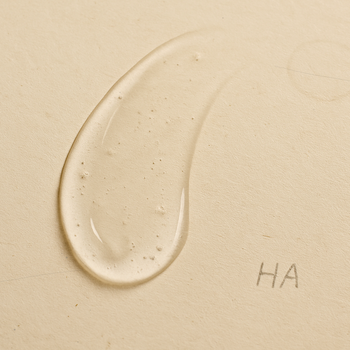
HA is a naturally occurring polysaccharide with a high affinity for water. Its molecular network acts as a controlled reservoir, regulating absorption and release with precision. In the skin, it sits within the extracellular matrix, contributing to firmness and volume; its natural levels decline with age. It functions as a responsive system, adjusting to environmental conditions and the needs of the skin.

When formulated well, it forms a thin, breathable film that smooths texture and refines surface reflection. When misused, it can feel tightening or lead to surface flaking, a reminder that technique and design define its performance.

Fig. 01
Hydration vs. Moisture — Hyaluronic Acid 101

II. Hydration vs. Moisture

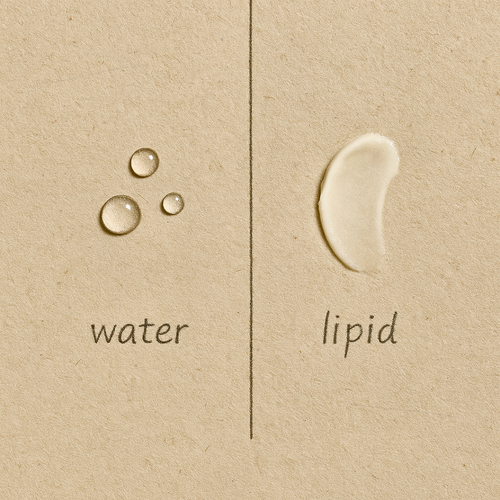
Dehydration arises from a lack of water; dryness stems from a lack of lipids. HA works on water content, while lipid replenishment is handled by the rest of the routine. A skin can be oily yet dehydrated, or dry yet well hydrated; the two axes are separate.

A serum such as Aurum Lustrum delivers hydration through layered molecular weights, while moisture retention is completed and sealed by Sacra Renovatio, whose evening primrose, frankincense, and hazelnut oils reinforce the barrier and slow trans-epidermal water loss.

The sequence is historical as much as scientific: Roman anointing typically ended in oil, not water. That order remains: hydration first, then replenishing lipids.

Fig. 02
Hydration vs. Moisture — Hyaluronic Acid 101

III. Molecular Architecture

HA exists in varying molecular sizes. Larger molecules remain near the surface, giving immediate smoothness; smaller fragments reach lower layers, supporting elasticity and suppleness.

In Aurum Lustrum, these molecular dimensions are deliberately calibrated to form a continuous hydration lattice, with surface comfort from high-molecular HA and deeper support from low-molecular HA. The balance is set in formulation, through proportion and weight, rather than by loading the serum with excess HA.

IV. Sequence of Absorption

After cleansing, apply Aurum Lustrum onto slightly damp skin, allowing its low-molecular HA to anchor water in the upper layers. Two to three drops are sufficient for the face and neck. Wait a brief moment for absorption (around 30–60 seconds) before following with a cream or oil.

Morning: Aurum Lustrum under moisturiser and SPF to maintain hydration throughout the day.

Evening: Aurum Lustrum followed by Sacra Renovatio; its lipid composition locks in the water drawn by HA and delivers overnight nourishment through fatty acids and plant sterols.

In dry or heated environments, a fine mist before and after application enhances the skin’s microclimate, sustaining water retention and supporting film flexibility.

Fig. 03
Hydration vs. Moisture — Hyaluronic Acid 101

V. Common Pitfalls

Why some experience dryness with HA:

  • Absence of a seal: water escapes when no lipid layer follows.
  • Excess quantity: a dense film can hinder absorption and feel constrictive.

The adjustment is simple: use less, apply with intention, and layer according to climate. Aurum Lustrum was engineered to remain stable under moisturiser and SPF without friction or residue.

VI. Results and Function

Immediately: smoother texture, balanced surface hydration, and a measured luminosity.

Within weeks: reduced dehydration lines, improved elasticity, and consistent comfort even in changing environments.

HA serves as a structural base for the rest of the formula’s work.

In the Codex Ingredientorum, it is identified as a “supportive humectant”, a structural element within balanced formulations. Paired with Acetyl Hexapeptide-8, as in Aurum Lustrum, it enhances visible firmness and reduces expression lines by up to 16% in four weeks, according to clinical literature on the active complex.

VII. The Philosophy of Balance

Hydration gathers; moisture fortifies. One fills, the other sustains. Treating them as linked but distinct steps gives the routine a clear sequence: water drawn in, then loss controlled.

This principle defines The Priestess Code — a discipline shaped by study, refined through intention, and faithful to the order that endures beneath beauty. It is a working method recorded in formulations and batch notes.

Together, Aurum Lustrum and Sacra Renovatio form a continuum of care: water-binding first, lipid sealing second. It is a simple sequence, designed to keep the skin in steady comfort, whether the air is dry, heated, or damp.

“The care of the body is the reflection of the soul’s order.”

Seneca, Epistulae Morales ad Lucilium

References

Papakonstantinou, E. et al. (2012).

Dermato-Endocrinology, 4(3): 253–258 — Defines HA’s function in hydration and barrier support.

Garg, T. et al. (2017).

International Journal of Biological Macromolecules, 104: 1414–1424 — Correlation between HA molecular weight and water-binding efficiency.

Leung, T. & Lupo, M. (2021).

Journal of Drugs in Dermatology, 20(5): 495–501 — Peptide synergy of Acetyl Hexapeptide-8 with humectant bases.

Baumann (2015).

Cosmetic Dermatology: Principles and Practice — Hydration versus moisturisation framework.

Related Reading

Of Oils and Gold: The First Roman Formulas

Of Oils and Gold: The First Roman Formulas

October 2025
Why We Work in Batches

Why We Work in Batches

September 2025
Sacra Renovatio: The Rite of Nightfall

Sacra Renovatio: The Rite of Nightfall

August 2025

Originally published: November 2025 – Sapientarium Chronicle V

From the Press

The house magazine—features, letters, and conversations from inside the Temple.

Enter the Press